
Florida Trucking Accident Attorney
Trucking Accidents
When an 80,000-pound truck meets a passenger car, the case is never simple and the carrier is never unprepared. Neither are we.
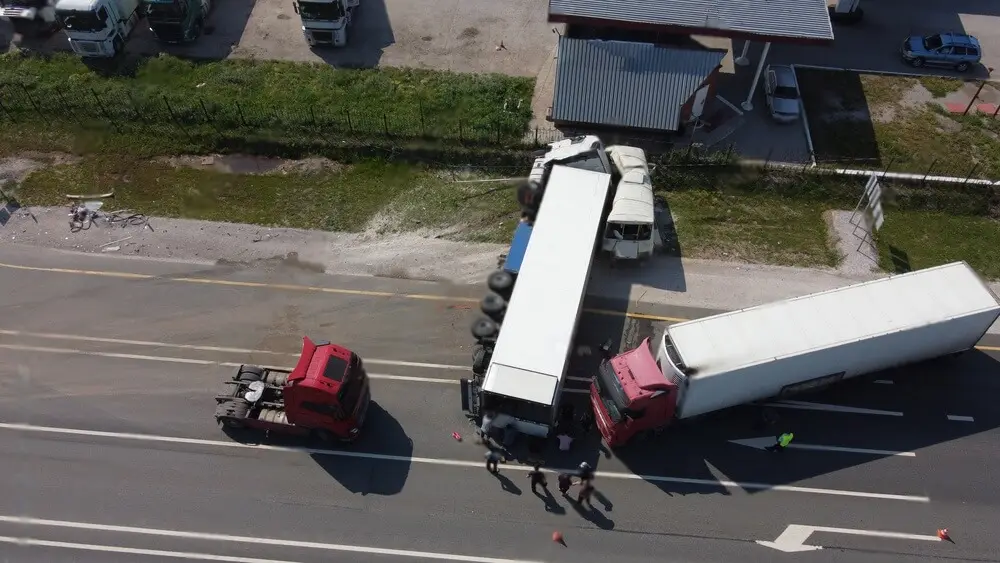
A fully loaded tractor-trailer can weigh 80,000 pounds. When one collides with a passenger vehicle, the injuries are rarely minor and the case is never simple. The carrier, its insurer, and its defense counsel begin working the file within hours of the crash. So do we.
Trucking cases are governed by a federal regulatory regime that most personal injury cases never touch. Hours-of-service rules, driver qualification standards, electronic logging mandates, and maintenance requirements create a record of what the carrier knew and when. Reading that record correctly, and preserving it before it disappears, is the foundation of the case.
Our firm has tried catastrophic injury cases to verdict for nearly four decades and serves as trial counsel for referring attorneys throughout Florida and across the country. If you or a family member has been seriously injured in a crash with a commercial truck anywhere in Florida, we would like to hear about it.
Florida Rules That Shape The Case
What To Know Now.
- Filing Deadline
- Two years from the crash for negligence claims accruing on or after March 24, 2023 (Fla. Stat. § 95.11). Earlier crashes generally keep the prior four-year period.
- Comparative Fault
- Modified comparative negligence. A plaintiff found more than 50 percent at fault recovers nothing (Fla. Stat. § 768.81).
- Federal Minimum Coverage
- Interstate carriers of general freight must carry at least $750,000 in liability coverage (49 C.F.R. § 387.9). Hazardous materials carriers carry more.
- Record Retention
- Carriers must keep electronic logging device records for only six months (49 C.F.R. § 395.8). A preservation demand should go out immediately.
Our Approach
How We Build A Trucking Case
- 01
Investigation
Preservation demands go out within days of retention. We secure the tractor and trailer, download engine control module and electronic logging device data, obtain dash-camera footage, and put a reconstruction team on the scene before it changes.
- 02
FMCSA Regulatory Analysis
We audit the carrier against the Federal Motor Carrier Safety Regulations, including hours-of-service limits, driver qualification and medical certification, drug and alcohol testing, inspection and maintenance, and cargo securement. Violations establish negligence and often reveal a pattern the carrier tolerated.
- 03
Expert Witnesses
Accident reconstruction, human factors, trucking-industry safety practice, biomechanics, and life-care planning. Our in-house physician consultant and RN medical review specialist prepare the medical case before outside experts are retained.
- 04
Damages
Economic loss, future medical care, lost earning capacity, and the human cost of a catastrophic injury are documented with the same rigor as liability. Where the evidence supports it, we pursue punitive damages under Florida's gross-negligence standard.
Questions
What Clients Ask First.
How long do I have to file a trucking accident lawsuit in Florida?
For crashes on or after March 24, 2023, Florida's statute of limitations for negligence claims is two years from the date of the crash. Crashes before that date generally keep the prior four-year window. Wrongful death claims carry their own two-year period, and claims against a government entity add pre-suit notice requirements and shorter deadlines. The evidence that decides a trucking case disappears far faster than any of these deadlines, so the practical window is measured in weeks, not years.
Who can be held responsible after a truck crash?
Rarely just the driver. Depending on the facts, responsible parties can include the motor carrier that employed or leased the driver, the owner of the tractor or trailer, the shipper or broker that arranged the load, a maintenance contractor, the company that loaded the cargo, and the manufacturer of a defective component. Federal leasing rules generally make the carrier whose name is on the truck answerable for the driver's conduct, and Florida's dangerous instrumentality doctrine can extend responsibility to the vehicle owner. Identifying every responsible party early is one of the main reasons the investigation matters.
What if I was partly at fault for the crash?
Florida follows a modified comparative negligence rule. If you are found 50 percent or less at fault, your recovery is reduced by your share of fault. If you are found more than 50 percent at fault, you recover nothing. Trucking companies and their insurers know this, and shifting blame onto the injured driver is a standard defense strategy. Careful reconstruction and early evidence preservation are how that argument gets answered.
What evidence matters most, and how quickly does it disappear?
Electronic logging device data, engine control module data, dash-camera footage, driver qualification files, hours-of-service records, dispatch and communication logs, inspection and maintenance records, and post-crash drug and alcohol test results. Federal rules require carriers to keep some of these records for only six months, and others can be overwritten or lost far sooner. We send a preservation demand to the carrier and its insurer immediately and, when warranted, move for a court order to secure the vehicle and its data.
Should I speak with the trucking company's insurance adjuster?
Not before you have counsel. Motor carriers and their insurers frequently have rapid-response teams at a crash scene within hours, and an adjuster's recorded statement is designed to lock in facts that limit the claim. You are not required to give one. Refer the call to your attorney and let the carrier communicate through counsel.
What does it cost to hire the firm for a trucking case?
Trucking cases are handled on a contingency fee basis, with the terms set out in a written agreement before any work begins. The initial case review is free and carries no obligation, and we will explain how fees and case costs work before you decide anything.
From The News
Further Reading.
Case Types
Related Case Types.
-
Motor Vehicle Accidents
Catastrophic injury claims arising from car, motorcycle, and rideshare collisions across Florida.
Learn more -
Traumatic Brain Injury
Cases built around the lifelong consequences of brain injury, including injuries that never show on a scan.
Learn more -
Wrongful Death
Representing families after a preventable death, with the rigor a case of this weight demands.
Learn more
Free Case Review
Injured In A Crash With A Commercial Truck?
Tell us what happened. The review is free, and the evidence that decides these cases is disappearing now.